

Demand Destruction Adds Spot Sulphur While Hormuz Flows Stay Thin
Rejected contract cargoes, idled consumers and Chinese smelter acid are feeding spot supply while only one to three sulphur vessels a week clear Hormuz, and Q4 contract resets may be what stops that flow.
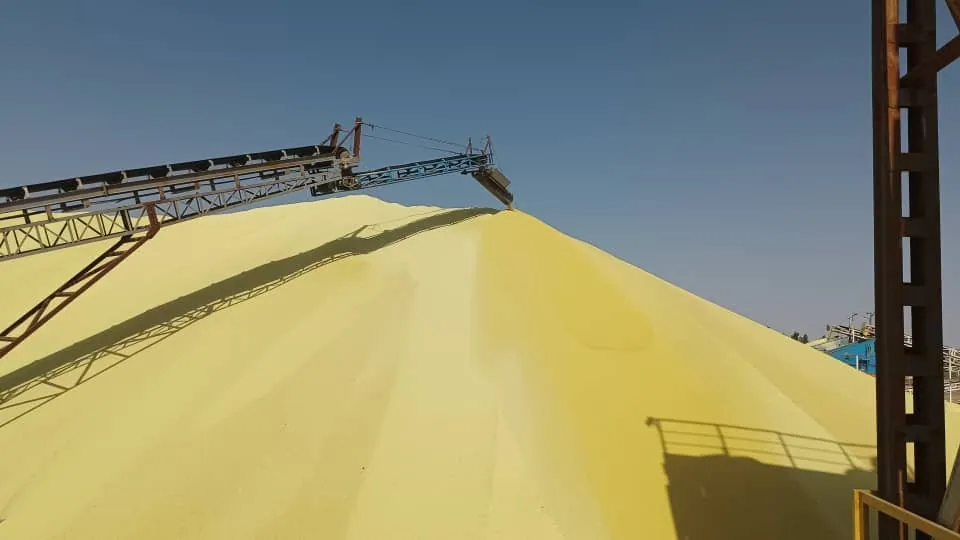
Two sulphur cargoes came out through the Strait of Hormuz in the week to 1 October. The Everest K, about 35,000 dwt, loaded at Ruwais and crossed with no confirmed destination. The Al Wathba, 64,000 dwt, also from Ruwais, is due at Jorf Lasfar on 7 October. It loaded on 5 September. That was the Persian Gulf’s visible contribution to the seaborne sulphur market for the week.
In the same week QatarEnergy Marketing cut its October QSP by $45 to $835/t fob Ras Laffan/Mesaieed. Argus took its Middle East fob range down to $810-850/t. North African granular lost $75 at the top of the range. A 50,000t Vancouver cargo sold to an Indonesian nickel producer at $930/t cfr. In September, Middle East sulphur was still going into that same market at around $1,060/t cfr.
So the price of Persian Gulf sulphur has dropped by $100-200/t in a few weeks, while the volume of Persian Gulf sulphur reaching buyers has barely changed. ICIS this week put the flow through Hormuz at one to three sulphur vessels a week, roughly 250,000-350,000t a month. The Ruwais loading list in Argus is consistent with that: five departures in September, six in August. Qatar’s last recorded sulphur departure was on 8 September. Kuwait’s were in late August.
The obvious reading is that the market has become better supplied. I spent a good part of this week trying to make that reading work, and it only partly does. Some supply has come back: Kazakh rail, Vancouver after maintenance, a few Saudi Red Sea cargoes. But much of the extra pressure on spot prices seems to come from the demand side. They come from consumers who stopped consuming, and whose contract cargoes, local supply and stocks are now looking for a new home.
That is the mechanism I want to work through. If it is right, the current decline is real, but it sits on a thin layer of released tonnes rather than on any repair to the original supply problem. And the floor, when it comes, will probably not be a number somebody picks. It is more likely to be the point where those released tonnes are used up and a few specific buyers run out of room to wait at the same time.
Where the extra tonnes are coming from
Argus put it plainly in its 1 October report: some contract recipients are rejecting deliveries, and those tonnes are going back to the spot market. It did not name the buyers. Nobody does in public. But if you read the rest of the report region by region, you can see where they probably sit.
Start with the Mediterranean. An Italian cargo is loading in the first half of October for export, because a drop in domestic demand freed the tonnage. Italy is not normally an exporter worth tracking. Its refinery sulphur goes to local fertilizer producers and sulphur burners. When those consumers cut runs, the refinery keeps making sulphur, because its output is set by crude runs and not by the acid plant down the road. The molten has to go somewhere. If the local buyer will not lift it, it gets formed and offered.
Greece is loading 6,000t for Israel. Black Sea offers into the Mediterranean are lower. The Mediterranean fob range fell $65 at the midpoint in one week on bids and offers alone, and Argus attributes part of it directly to demand destruction freeing export tonnes, particularly from Italy. None of this is new production. It is existing production that lost its usual buyer.
Germany shows the same mechanism with a name attached. The caprolactam complex at Leuna, formerly Domo’s, has been in and out of insolvency all year. Domo’s German units filed in December. A rescue company owned by InfraLeuna and Leuna-Harze took over in April. That company filed for self-administered insolvency in June, and its managing director said insufficient sulphur supply had limited plant utilisation and pushed up its liquidity needs. This week Argus reports the Leuna operations idling and releasing sulphur to other consumers. A plant that failed partly because it could not secure enough sulphur is now giving its sulphur back to the market.
Benelux is more interesting, because the supply side there also weakened. A refinery in the Rotterdam area has technical problems that Argus expects to keep its sulphur output below normal until early November. Maintenance around Rouen is cutting French output. In a normal year those two events would tighten northwest European liquid sulphur. This time Argus does not expect them to tighten anything much, because consumers are running at lower rates and some have closed permanently. Lost refinery output and lost consumption roughly cancel. I would not have expected them to net out that neatly in the spring.
Southern Africa gives a third version. Foskor’s buy tender for 30,000-50,000t appears to have been scrapped after offers came in above $950/t cfr. The mining majors are out of the spot market. The Pangeo, 57,000 dwt from Ruwais, is heading for Richards Bay. It will be the first sulphur cargo there since mid-August. If Foskor is not buying and the miners are waiting, anyone holding a cargo intended for that market has to decide whether to store it or redirect it.
Then there is Vancouver. Argus says logistics constraints may have pushed Canadian suppliers to move cargoes faster than usual. That is a supply-side push rather than a demand-side release, but it lands in the same place: more prompt tonnes offered into Indonesia, Brazil and Morocco at whatever clears. ICIS made the same point from the buyer’s side. Recent Canadian sales into Indonesia, Morocco and Brazil reset price expectations across three regions and undercut Middle East ambitions.
Vancouver’s role deserves a closer look, because it is often described as the replacement for Persian Gulf supply. The July-September loading list runs to Indonesia, Australia, Namibia, Chile, New Caledonia, Mexico, Morocco and India. That is a supplier spreading roughly the same annual volume across more destinations. Argus says suppliers still expect Vancouver exports to rise 3-5pc in 2026, without any formal increase in handling or granulation capacity. A few percent is not a replacement for the Persian Gulf. Vancouver is redistributing tonnes, not adding many. When it sells into Brazil at $985/t cfr, as it did in September, that cargo is not going to Indonesia or China. Its price-setting power this autumn comes from speed and freight, not from volume.
Not every consumer is walking away, and it is worth putting that on the record. Tupras awarded its October domestic sulphur tender in full at $818-918/t fca. The midpoint was only $1 below September, Izmit lots rose by about $50, and all three refineries cleared well above Tupras’s floor prices. Turkish domestic buyers are still competing for local tonnes. Turkey restricted sulphur exports earlier in the year, so its domestic consumers may have had less access to the release valve that the rest of the Mediterranean now enjoys. But the Turkish result is a reminder that demand destruction is uneven.
So is the feedback loop in the hypothesis happening? I think it is. High sulphur cost pushes some downstream margins below zero. Run rates fall. Nominations fall or cargoes are rejected. The freed tonnes appear as spot offers into a market where buyers have every reason to wait. Each lower print makes the next buyer more patient.
But I want to be careful about the size. Argus does not quantify the rejected volume, and I have not found anyone who does. The public evidence suggests the released volume is small relative to global trade: the Italian cargo, the Leuna sulphur, Black Sea crushed lump that used to go to Mediterranean burners, maybe a redirected African cargo. In a normal market that would be noise. But this is a thin prompt market, with the Persian Gulf moving 250,000-350,000t a month. Released tonnes do not need to be large to move the marginal price.
What moves it is a few sellers who must sell and a few buyers who do not have to buy.
There is one test I could not run properly. Are supplier inventories rising? The only direct inventory data in the Argus report is Chinese, and Chinese stocks rose slightly this week, from about 931,000t to 963,000t, on vessel unloadings. Persian Gulf producer inventories may be building, given the gap between production and visible shipments, but I could not find reliable public stock data to confirm it. The same goes for Kazakhstan, where the rail limits point the same way, and for Alberta. If that stock exists, it sits behind a chokepoint or at the far end of a long rail line. It is not tradable supply in October.
What the Middle East fob price is measuring now
The Middle East fob number is the one most people will quote this month. It is also the one I would be most careful with.
Look at what it costs to get Persian Gulf sulphur into Indonesia. Argus has Middle East to Indonesia freight at $145-148/t for 50,000-55,000t and $150-160/t for 30,000-35,000t. Vancouver to China, the closest route in the table to Vancouver-Indonesia, is $34-38/t. Black Sea to North Africa is $40-50/t. Middle East to North Africa is $156-167/t.
So a Persian Gulf cargo going to Indonesia carries something like $100/t or more of extra freight compared with a Canadian cargo going to the same part of the world. Most of that gap probably reflects the war: longer voyages, war-risk insurance, fewer owners willing to go in, and time spent waiting.
If delivered Indonesia is $930-970/t cfr and Vancouver can land there competitively, the Persian Gulf seller has to absorb the freight gap in its fob. Take $950 cfr, subtract $145 freight, and you get about $805 fob. Argus’s own netback assessment for 30,000-35,000t cargoes from the Middle East sits at $815-826/t. The October QSP at $835 and the Argus range at $810-850 are where they are because that is what the delivered arithmetic allows. They are not where they are because Ras Laffan suddenly has ships.
Argus says as much: the Qatari price reflects lower delivered prices and competition from Vancouver, especially in Indonesia. I read the fall in Middle East fob as a measure of how much freight and risk Persian Gulf producers are absorbing to stay in markets that Vancouver can now reach more cheaply. It is not evidence of improved access.
That raises a question I don’t see asked often enough. Who actually sells at the Middle East fob price? Most Persian Gulf sulphur moves on monthly or quarterly prices to term customers. The Ruwais list shows where the scarce slots are going. The An Da Hai, 80,000 dwt, to Paradip for IFFCO, arriving on 3 October. The Al Karama to Vizag for CIL. The Al Wathba and Minoan Sea to Jorf Lasfar. The Shun Fu Fa to Santos. The Pangeo to Richards Bay. The Zhong Mao to Dar es Salaam. These are large ships going to large term buyers. With only a small number of crossings available, term commitments are likely to take priority over discretionary spot business.
If that is right, the fob assessment is being set by a small number of netbacks against delivered competition, while the physical volume moves mostly under contract. A lower QSP then does more to set the tone for fourth-quarter contracts than to add spot liquidity. Kuwaiti and UAE October prices are due in the next few days. The UAE’s September OSP was $960 and Kuwait’s KSP $865. Both will tell us how far the other Persian Gulf sellers are willing to follow Qatar.
Iran is the outlier at $750-800/t fob, unchanged. Argus notes the substantial cost and risk of Iranian exports. Iranian sulphur is cheap largely because few buyers can take it.
Crude came back first
Now compare crude. Kpler data cited by CNBC on 30 September showed crude moving through Hormuz at a seven-day average of 13.5mn b/d, which Kpler matched to the pre-war baseline. Other estimates are lower. Kpler’s September figure for total Middle East crude exports, reported by Al Jazeera, was about 16.3mn b/d, just under 80pc of pre-war, while JP Morgan put regional exports at 98pc of pre-war. Windward counted only 55 AIS-visible transits of all ship types between 16 and 23 September, against roughly 910 a week before the war. The numbers disagree partly because many tankers are now moving dark or through ship-to-ship transfers.
On direction, though, they agree. Crude has recovered most of its volume. Sulphur has not.
Part of the explanation shows up in shipping data rather than in sulphur reports. Lloyd’s List Intelligence found that crude tankers drove the increase in Hormuz transits in August, while bulk carriers and containerships saw little change. Kpler said more than 70pc of the crude that crossed Hormuz in August switched tankers off the UAE or Oman, with the shuttle system depending on US naval protection. Saudi Arabia has its pipeline to Yanbu on the Red Sea, which takes crude around the strait entirely, although Houthi attacks damaged it in September. Lloyd’s recorded 19 Saudi-linked VLCC transits in one week in mid-September, the highest since the war began.
Most of that infrastructure does not exist for sulphur. A VLCC carries about 2mn barrels, roughly $200mn of cargo at current Brent. A Supramax carries 50,000t of sulphur worth around $40-50mn. Escorts, war-risk cover and an STS relay make obvious sense for the first. They look much less attractive for the second. There is no sulphur pipeline to the Red Sea. I am not aware of any established STS operation for granular sulphur off Fujairah, and transferring solid bulk ship to ship is slow, dusty and needs grab capacity. Lloyd’s List has also reported Adnoc-owned bulk carriers being struck in the strait. That tells owners something about the risk on exactly the kind of ship that carries Ruwais sulphur.
Some of this is inference. I have not seen a direct source saying that sulphur shipowners are being refused convoy protection, or that escorts are limited to tankers. But the outcome, with crude close to normal and dry bulk barely moving, is documented by more than one independent tracker. The strait is open for some cargoes and much less open for others.
There is one partial sulphur version of Yanbu: Saudi Arabia’s Red Sea coast. The Jorf Lasfar line-up shows the Royal Topaz with 35,000t from Yanbu berthing on 28 September and the Kriti Atlas with about 35,000t from Jizan due on 15 October. That is Persian Gulf-region sulphur bypassing Hormuz in the same way Saudi crude does. It helps OCP. It is small, and it depends on the Red Sea and Suez staying usable for northbound traffic, which has not been a safe assumption this year.
So when someone says Hormuz flows are back to pre-war levels, the useful question for this market is: which flows? For sulphur the answer is still no.
Contracts are resetting faster than spot is clearing
The quarterly negotiations are where the new mechanism shows up in money.
North Africa is the clearest case. Argus has third-quarter contract deliveries to North Africa at $990-1,010/t cfr. Early fourth-quarter discussions are at $850-870/t cfr. If that holds, it is a cut of about $140/t in one quarter. That is deeper than the fall in North African spot over the same period.
Why would contract prices fall faster than spot? Normally they lag. Here the buyer has two strong arguments. Black Sea sulphur at $780-860 fob, plus $40-50 freight, lands at roughly $820-910/t cfr, well below the Q3 contract. And the buyer is running at reduced rates. A buyer who is not using the full contract volume has every reason to argue on price, and can credibly threaten to take less.
The $850-870 talk is useful for another reason. Back it out with Black Sea freight and it implies an fob netback of roughly $805-825/t, right at the bottom of the Black Sea spot range. For this North African negotiation, the cheapest reliable delivered alternative appears to be carrying more weight than Middle East contract levels.
Benelux shows the other side of contract behaviour. Suppliers opened fourth-quarter liquid sulphur talks at a rollover. Some buyers want $100-150/t off. At the same time, Argus reports that the premiums negotiated annually on top of the Benelux quarterly price are rising, despite lower demand. I think that is one of the more important lines in this week’s report.
It suggests suppliers are ready to give ground on the index but want more for the service that sits on top of it: liquid logistics, storage, delivery. That makes sense on the evidence. Low water levels have pushed some sulphur from barges onto trucks, and truck availability is limited. Consolidation in the European chemical industry has removed some of the backhaul that made liquid sulphur distribution cheaper. A buyer can switch to a cheaper molecule. It cannot easily switch to a cheaper way of delivering molten sulphur. So can suppliers defend premiums while the outright price falls? In Benelux, apparently they can.
In the same week, Sojitz Solvadis announced it had bought Citis Group in France: liquid sulphur distribution, storage at Le Havre, Marseille and Dunkirk, and the pastille-forming plant at Dunkirk that has run since 1985. I would not read strategy into every acquisition. This one has a physical logic in the current market, though. Europe now has liquid sulphur that some local consumers no longer want. Forming capacity is what turns a molten surplus into a solid product that can go by ship to North Africa or elsewhere. Citis already sells into northwest Africa. Whether that was the reason for the deal, I don’t know. That is why I think it is relevant this quarter.
Tampa is the third contract to watch. The Q3 molten price settled at a record $705/lt delivered. Argus collected fourth-quarter estimates ranging from $30/lt to $200/lt lower, with most near $600/lt. ICIS reports that participants expect a cut of at least $50 and quotes a trader dismissing the idea of a rollover. European buyers have reportedly paused their own talks to see where Tampa and the remaining Persian Gulf monthly prices land.
There is an oddity in the US market that deserves more attention. US Gulf export sulphur is the most expensive fob origin in the Argus table at $940-975/t. Tampa is expected to settle around $600/lt, which is roughly $590/t. That is a gap of around $350/t between what a Gulf Coast refiner can get abroad and what a Florida phosphate producer pays at home. If export capacity were unlimited, the gap would close. It does not close. Much of US refinery sulphur is molten and sold locally, and only the part that can be formed, stored and loaded earns the world price. The rest is captive to the domestic contract. The US is not a swing supplier in the way Vancouver is.
I would also be careful with the refinery side. EIA data show Gulf Coast refineries running at around 98pc in early September. High utilisation does not automatically mean more sulphur. Recovered sulphur depends on the crude slate and its sulphur content, on coking and hydrotreating configuration, and on whether heavy sour barrels are economic to run against lighter grades. With Venezuelan, Mexican and Canadian heavy flows all shifting this year, I would not assume US sulphur output is rising simply because throughput is high. Venezuelan crude imports alone reached 782,000 b/d in the week to 11 September, the highest since 2017 according to EIA data. That is heavy sour crude going into Gulf Coast cokers. But if it displaced Mexican or Canadian heavy barrels, which are also sour, the net change in recovered sulphur could be small. The narrower point is what matters here: whatever the US produces, the seaborne market only sees part of it.
Then Kazakhstan. Russia stopped rail transit of Kazakh sulphur to its ports on 24 May and lifted the ban on 24 July. Argus expects October exports outside Russia at around two-thirds of the pre-restriction average of about 300,000t a month, so roughly 200,000t, with November and December still unconfirmed. ICIS says end-of-season grain movements are congesting the Russian rail network.
So Kazakh logistics are partly restored. Now look at where the tonnes go. Almost every vessel in the Argus Ust-Luga loading list since January went to Jorf Lasfar or Safi, with a few to Santos and one to Dakar. Kazakh sulphur is largely OCP’s sulphur. Its return narrows Morocco’s deficit. It adds very little true spot liquidity. A reopened corridor is not the same thing as new spot supply, and the Q4 North Africa contract is where Kazakh tonnes are really being priced.
There is a second restriction that gets less attention. Kazakhstan suspended its own sulphur exports on 27 June, with an exemption only for shipments to Russia, and according to the September-October issue of Sulphur magazine that order is still in force. The cargoes loading at Ust-Luga since late August appear to be going first to contractual commitments. Lifosa in Lithuania, which used to take almost all its sulphur from Kazakhstan, has been cut off. Argus’s two-thirds estimate for October presumably reflects tonnes moving under some form of approval. I could not confirm how those approvals work.
Then Russia tightened the acid side. A government resolution signed on 12 September puts Russian sulphuric acid exports under an approval procedure until the end of the year. Almost all of that acid goes to Kazakhstan, mainly for copper and for Kazatomprom’s uranium leaching. Kazatomprom said on 21 September that its Russian suppliers will honour 2026 contracts and that it does not expect a material impact. But if Russian acid becomes harder to get in 2027, the obvious substitute is Kazakh sulphur burned at home, and EuroChem started up an 800,000t/yr sulphuric acid plant in Kazakhstan’s Zhambyl region this year. That is my inference, not something anyone has announced. If it happens, the ceiling on Kazakh exports will be set partly by Kazakh acid demand, not only by Russian rail.
Why cheaper sulphur has not brought the plants back
This is the part of the argument that should worry anyone expecting a quick rebound.
The simple model goes like this: sulphur falls, margins improve, run rates rise, sulphur demand comes back. The evidence says each major downstream sector has at least one other constraint that has not moved, and in some cases it has got worse.
Start with US phosphate. The US section of the Argus report has a sentence I keep coming back to. Even in the first quarter, when Tampa was $495.69/lt, US phosphate output was reduced. A $600/lt fourth-quarter settlement would still be above that level. Mosaic’s 10-Q shows a processed phosphate operating rate of 58pc in the second quarter, down from 61pc a year earlier, and attributes the lower output primarily to sulphur availability. But the same filing shows North American phosphate rock production of 3.9mn t in the first half against 5.1mn t a year earlier, because of moves into new mining areas. Mosaic’s phosphate gross margin for the half was essentially zero. Nutrien has had its phosphate business under strategic review since last year.
So in Florida, sulphur is a constraint, but so is rock, and the balance sheet may be the binding one. Argus estimates that a $600/lt Tampa price implies a sulphur cost of around $256/t of DAP. Phosphate prices are firm because supply is tight, which helps. But a producer that cut runs at $496/lt in the first quarter will not obviously restore them at $600/lt in the fourth.
OCP is a different story with a similar conclusion. Its first-half EBITDA margin held at about 28pc even though sulphur prices roughly tripled while fertilizer prices rose only around 20pc. It moved toward TSP, which needs less sulphur and no ammonia. TSP rose to 35pc of OCP’s fertilizer export volume from 26pc. OCP also reported that global phosphate fertilizer trade fell about 22pc in the first half. OCP has little reason to run at 100pc to sell DAP into a market where farmers are delaying purchases, even if sulphur gets cheaper. Its run rate depends on sulphur and acid availability, on product mix, and on what the market will take.
There is a conflict in the public record here that I should flag. In June, OCP management was reported as planning to restore full fertilizer capacity by the end of that month. Argus now puts Moroccan P2O5 operating rates at 50-60pc of capacity, with Jorf Lasfar sulphur arrivals of just under 300,000t in September against about 700,000t a month before the war. Either the restart did not happen at the scale described, or it was reversed. I would trust the physical arrival data.
India splits in two. Fertilizer producers receive government support to offset costs. Sulphur burners selling merchant acid do not, and Argus says they are still struggling even after the recent decline, because domestic smelters have started cutting acid prices on poor export economics. One Indian consumer is protected. The other is being squeezed by a cheaper substitute.
The subsidy needs to be read carefully. For rabi 2025-26 the government raised the DAP subsidy to Rs29,805/t plus a special additional Rs3,500/t. The new rabi season started on 1 October, and Argus reports importers are still waiting to hear the new nutrient-based subsidy rates. The fourth-quarter phosphoric acid contract is also unsettled. Subsidy does not change what sulphur costs. It moves part of that cost from the producer’s accounts to the government’s budget. While it lasts, Indian fertilizer sulphur demand is held up by fiscal policy more than by plant margins. That kind of demand probably does not respond much to the sulphur price. It responds to the budget.
On the market itself, a 30,000t non-mainstream cargo was offered at $965/t cfr west coast this week against bids of $900. The big fertilizer buyers are receiving Adnoc and Qatari term cargoes, such as the An Da Hai for IFFCO. India’s spot market is largely the burners, and they are the buyers who can least afford it.
Nickel is where the arithmetic is starkest. SMM puts HPAL consumption at roughly 10-12t of sulphur per tonne of nickel in MHP. At $950/t cfr, that is roughly $9,500-11,400 of sulphur per tonne of contained nickel. LME three-month nickel closed at about $15,600/t on 2 October, near a nine-month low and down around 8pc on the month. MHP is priced as a percentage of LME, and SMM reported in late September that MHP payables were weakening as more spot MHP became available.
I don’t want to turn that into a single break-even number. Ore grade, acid consumption per tonne, cobalt credits, power cost and plant design vary too much, and a Chinese-owned HPAL feeding its parent’s precursor plant thinks about margin differently from a merchant MHP seller. But directionally it is clear enough. Sulphur in Indonesia has fallen by roughly $100-200/t since September, which saves perhaps $1,000-2,000 per tonne of nickel. Nickel itself fell by around $1,300-1,400/t over the past month. Most of the relief has been taken away by the metal price.
Indonesian MHP output fell from about 42,000t of nickel in January to 29,900t in June, according to SMM. Huayou put half of Huafei’s MHP capacity into care and maintenance from May, citing sulphur costs. In late September SMM said some producers had restarted MHP output after replenishing sulphur. So the HPAL sector is not simply waiting for cheap sulphur. It buys when it has to, runs what it can, and the nickel price decides how much it can bear.
European chemical demand is probably the least likely to come back quickly. Leuna is idling. Argus describes some European closures as permanent. European buyers told ICIS that energy costs are rising again. A caprolactam or speciality chemicals plant that shuts because of feedstock costs, energy costs and weak end markets does not reopen because sulphur fell $100.
Brazil adds an acid twist. ICIS reports that Mosaic and EuroChem have curtailed production and closed some units because of sulphur costs. Spot is $980-985/t cfr. Unigel’s sulphur burner at Camaçari, if it ramps up, would supply acid to buyers around Aratu who now import acid. In principle that shifts Brazilian demand from imported acid to imported sulphur. But it only works if Unigel can buy sulphur at a cost that beats imported acid, and Argus notes market concern about limited spot sulphur and high import costs in Brazil.
Freight points to the likely supplier. US Gulf to Brazil is $27-34/t, Baltic to Brazil $40-45/t, Black Sea $45-55/t, Middle East $165-167/t. On today’s numbers, Baltic fob plus freight lands cheaper than US Gulf. But Baltic tonnes are largely committed to Morocco. The more realistic suppliers for a Brazilian burner are Vancouver or the US Gulf, at around $1,000/t cfr. For a new burner trying to displace imported acid, that is difficult economics. Brazilian acid importers may simply stay with acid.
Put together, the next marginal sulphur buyer probably needs several things to improve at once. For phosphate, that means lower sulphur and lower ammonia, firm phosphate prices and farmers willing to buy. For HPAL, lower sulphur and a firmer nickel price and better MHP payables. For European chemicals, lower sulphur and lower energy and some recovery in end markets. A falling sulphur price is necessary. It is not enough by itself.
China: low stocks, low imports, and a substitute it chose
China is the contradiction everyone points to. I think most of it can be explained.
Chinese port inventories were 923,000t on 24 September, against 2.37mn t a year earlier and 2.53mn t in 2024. China imported around 272,000-277,000t of sulphur in August according to customs data reported by SMM and the South China Morning Post, down about 65pc on the year, against an average of around 800,000t a month in 2025. And yet Argus says Chinese import demand is very low, Chinese bids are below other markets, and other buyers are taking the cargoes China would once have absorbed.
Look at the stock data more closely. SMM recorded port stocks at 748,800t on 23 June, the lowest since 2017, and 727,900t in early July. They are now above 900,000t. Imports were tiny over that period. So stocks rebuilt by roughly 200,000t during a summer of collapsing imports. The simplest explanation is that consumption fell faster than imports.
Then look at the distribution. Zhenjiang, the Yangtze hub, holds 210,000t against 1.05mn t a year ago. Dafeng holds 83,000t against 270,000t. Zhanjiang holds 206,000t against 500,000t. Fangcheng, in Guangxi, holds 380,000t, more than a year ago. The depletion is concentrated on the Yangtze and the east coast.
Who does the Yangtze serve? SMM’s first-half review found sulphuric acid output in Hubei down 53pc year on year because of low phosphate operating rates and maintenance. Hubei is the centre of Chinese phosphate production. So the area with the least sulphur in stock is probably also the area whose consumers have cut hardest. That is consistent with low stocks there being partly a symptom of low consumption, not only a sign of buying to come.
Second, price parity. Argus has domestic ex-works sulphur at Yn7,000-7,200/t, which it equates to around $912/t cfr. Imported granular is $960-970/t cfr. Import parity is roughly $50 above domestic. Few buyers import at a premium to domestic material unless they cannot get domestic. Molten from Korean and Japanese refineries is still arriving in 3,000-5,000t parcels into Weifang, Zhenjiang, Longkou and Qinzhou. Shandong refinery molten was offered at Yn7,700-7,750/t ex-works before the holiday. For now China is running on local refinery output plus short-haul molten.
Third, and I think most important, acid. China suspended sulphuric acid exports from 1 May, provisionally to the end of the year. That kept smelter acid at home. SMM’s copper smelting acid index was Yn1,351/t on 18 September. In the following week, acid quotes in central China broke below Yn1,000/t, with Hunan at Yn910-1,110/t. By 30 September the index was down to Yn1,218.5/t, its thirteenth weekly fall in a row, while Shandong sulphur held around Yn7,550/t.
Run the raw-material cost. One tonne of sulphur makes roughly three tonnes of sulphuric acid. At Yn7,100/t, the sulphur alone costs around Yn2,300 per tonne of acid. Smelter acid is selling for Yn1,000-1,350/t in much of the country. For a phosphate plant that can receive, store and use merchant acid, buying smelter acid instead of burning imported sulphur saves something like Yn1,000 per tonne of acid before counting the lost steam credit.
Not every plant can do that. A large integrated phosphate complex with its own burners depends on the steam and power from burning sulphur. It cannot replace all its acid with smelter acid without losing that energy and without the logistics to receive large volumes of acid by rail or truck. Plants close to smelters can substitute more. Plants far from smelters, or built around burners, can substitute less. SMM’s data on Anhui, where new smelter acid capacity lifted acid output by about 20pc in the first half, show where substitution is easiest. So the substitution is real, but partial, and it varies by province and plant.
That makes China’s absence from the import market partly a policy outcome, not only a demand outcome. The acid export ban helped create a cheap domestic substitute for imported sulphur.
How long can that last? Three things could end it.
The first is smelter maintenance. SMM points to October maintenance in Guangxi and at Beifang Copper’s Houma smelter, among others, as support for acid prices. Less smelter acid means firmer acid prices and a narrower gap to sulphur-based acid.
The second is the export ban itself. It runs provisionally to 31 December, and SMM reports that acid producers in Sichuan are already watching that date. If the ban is lifted and Chinese smelter acid can go abroad again, to Chile, Indonesia or Morocco where acid is short, domestic acid prices would rise and burners would have more reason to buy sulphur. If it is extended, the substitution continues into 2027.
The third is the phosphate season. China’s spring application needs product made over the winter. SMM’s late-September commentary was already talking about winter stocking and waiting for policy. If Chinese phosphate plants raise runs for spring, they will draw on local sulphur and smelter acid together, and 923,000t of port stocks does not leave much room.
None of this will be visible until after Golden Week. China is on holiday from 1 to 7 October, and Argus has suspended Chinese assessments. I would not read anything into this week’s silence. What I would read is what buyers were doing before the holiday: running down stocks, consuming local supply, switching to smelter acid where they could, and bidding below other markets. That was a choice made while a substitute was available.
The question for November is whether the substitute is still there.
Who can still wait, and who is running out of room
“Buyers are waiting” is the most common phrase in sulphur reporting this autumn. It covers very different situations. Here is how I would sort the main buyers now.
Mediterranean burners and fertilizer producers can wait, and they are choosing to. Argus says lower run rates give them more time before they need the spot market. Egyptian buyers are in the market but holding back from confirming deals because prices may fall further. European liquid sulphur consumers have Q4 talks open and new local tonnes from Leuna and Italy. These buyers are not short of sulphur. They are short of margin. They will come back when they believe spot has stopped falling, and not before.
Then there are buyers with a substitute: Chinese phosphate plants near smelters, and Indian sulphur burners facing cheaper smelter acid. Their return depends on the acid market more than on the sulphur market.
A few have left, possibly for good. Leuna and the other European closures. The Brazilian units that Mosaic and EuroChem have closed. Foskor, at least for this tender. Whether permanent means permanent will depend on the cycle, but these buyers are not coming back in Q4.
Indonesia is different. HPAL plants cannot simply disappear from the sulphur market for a quarter. SMM says HPAL plants hold only one to two months of sulphur inventory. Indonesian buyers have been in the market every week of this decline, at around $1,060-1,135/t cfr in September and $930-970/t now. Pupuk Indonesia’s tender for 55,000t for Petrokimia Gresik is still under negotiation, and a freight enquiry for 52,000-65,000t from Vancouver to Indonesia for 13-27 October looks like the tender cargo.
Cargo size matters here. A 10,000t cargo from southeast Asia sold to an Indonesian nickel producer at $970/t cfr in the same week a 50,000t Vancouver cargo sold at $930. Part of that $40 gap may be the price of a small, prompt parcel for a plant that cannot wait for a Supramax. Origin, quality, timing or terms could explain some of it too, and the report does not let me separate them. Singapore may show the same pattern: ExxonMobil’s 7,000t sell tender reportedly went to a Malaysian buyer at $975-990/t fob, possibly above $1,000, though the final price is unconfirmed. The price of 10,000t is not the price of 50,000t, and in a market where buyers have stopped committing to large forward cargoes, small-lot prices may say more about who is genuinely short.
I think Indonesia is the buyer most likely to hold the floor from week to week. It will not buy at any price, because nickel limits what it can pay. But it will keep buying.
Morocco is its own case. Measured against its own history, it has the largest gap in the market. Jorf Lasfar took just under 300,000t of sulphur in September against about 700,000t a month before the war. Acid imports fell to 220,000t over January-September, against nearly 1.4mn t in the same period last year, with only three cargoes and 54,000t in the third quarter. So September arrivals were roughly 400,000t below the pre-war monthly average, and the lost acid imports are worth perhaps another 40,000-50,000t a month of sulphur equivalent. That is not necessarily the same as a 400,000t current consumption deficit. OCP is operating below capacity and has changed its product mix, so what it needs now is less than what it used to take.
But Morocco is not acting like a desperate buyer. It is pushing Q4 contract prices down by around $140/t. It is taking small 13,000-22,000t cargoes from Poti, Batumi and Ust-Luga, and 35,000t parcels from the Saudi Red Sea coast. It is selling more TSP. OCP can wait because it can change its product mix, and because the phosphate market does not need all its output at the moment. If phosphate demand firms ahead of the northern hemisphere spring, Morocco could quickly become the buyer with the largest unmet requirement, and it has the means to pay.
The scheduled arrivals into Jorf Lasfar through mid-October, the Aurelia from Ust-Luga, the Muzaffer Esener from Poti, the Al Wathba from Ruwais and the Kriti Atlas from Jizan, add up to about 114,000t. A 21,000-22,000t cargo from Poti is being fixed for 5-10 October loading. Unless more Persian Gulf cargoes come through, October could easily be another month in the 250,000-350,000t range.
Indian fertilizer producers are mostly covered. Those on Adnoc and Qatari term supply receive 46,000-80,000t ships. India’s spot market is thin because its largest buyers do not need it.
Central African mining is easy to overlook. It depends on Dar es Salaam, where Argus reports 14-21 days of discharge congestion, fca prices of $1,100-1,200/t and trucking to Kolwezi at $345-365/t. The Zhong Mao, from Ruwais, arrived on 30 September. The Dema M, from Kuwait, has been waiting since 15 September. Add it up and the copper belt is paying around $1,450/t or more delivered for sulphur. That demand is sticky but slow. Port and road capacity limit it more than price does.
What would the floor look like in this picture? Not one buyer coming back. A cluster: Indonesian HPAL buying because it has to, China returning after Golden Week because acid tightens or the export ban ends, and Morocco stepping up because phosphate demand improves or Q4 contract volumes need topping up. Any one of these alone can be absorbed by the released tonnes. Two or three together, against a Persian Gulf still moving 250,000-350,000t a month, would empty the spot market quickly.
The physical evidence I would look for is not a price print. It is cargo size and timing. When buyers start fixing 50,000t-plus ships for November arrival instead of 10,000-30,000t prompt parcels, and when more than one region does it in the same fortnight, the waiting is over.
What would tell us the correction has gone far enough
I have looked for the one indicator that settles this, and I don’t think there is one. But the research narrows it to a few.
Chinese port stocks after Golden Week. If they keep rising from 963,000t through October while imports stay low, China’s substitution is still working and prices have further to go. If stocks start falling while Chinese bids move back toward $960-970/t cfr, the largest importer is back.
Chinese acid. Watch the October smelter maintenance and any signal on the 31 December export ban. Sulphur in China is now partly priced by acid policy.
The Q4 North Africa and Tampa settlements. If North Africa settles near $850-870/t cfr and Tampa near $600/lt, contract prices will be at or below current spot in several markets. At that point buyers with contract tonnes stop rejecting them, because the contract is no longer the expensive option.
That is the signal I would weight most. Part of the current decline is fed by buyers walking away from cargoes priced on third-quarter economics. Once fourth-quarter contracts reset lower, the incentive to reject disappears and those tonnes stop coming back to spot. What is left is the Persian Gulf at one to three ships a week, Kazakhstan at two-thirds, Vancouver at close to full stretch, and inventories that are still low almost everywhere that matters.
And one more thing. A ship. If sulphur flows through Hormuz move from one to three vessels a week toward something like the crude recovery, all of this changes and the floor is lower. If they move the other way, with another attack on an Adnoc bulker or a pause in transits, the released tonnes could be absorbed within weeks.
I don’t know which of those comes first. For now the market is pricing the tonnes that have been let go. It has not yet priced what happens when there are no more of them.
Sources and data consulted
- Argus Media — Argus Sulphur, 1 October 2026. Primary weekly market reference for sulphur prices, freight, vessel line-ups, contract discussions, Chinese inventories, Moroccan arrivals and regional market activity.
- ICIS — Sulphur outlook softens as buyers gain leverage ahead of Q4 settlements, 2 October 2026. Used for Hormuz sulphur flows, Q4 contract expectations, Canadian sales and Brazilian curtailments.
- CNBC (Kpler data) — Crude oil exports through the Strait of Hormuz hit prewar levels, but fuel shipments remain constrained, 30 September 2026. Used for Hormuz crude flows and the share moved by ship-to-ship transfer.
- Al Jazeera (Kpler data) — Is Iran losing its leverage over the Strait of Hormuz?, 30 September 2026. Used for September Middle East crude exports.
- OilPrice.com (JP Morgan and Lloyd’s List data) — Middle East Oil Exports Stage a Remarkable Comeback, 2 October 2026. Used for the JP Morgan export estimate and the Yanbu pipeline attack.
- Oil & Gas Middle East (Windward data) — Strait of Hormuz oil flows near pre-war levels, 30 September 2026. Used for AIS-visible transit counts.
- Lloyd’s List Intelligence — Strait of Hormuz Brief: 9 September, 2026. Used for transit trends by vessel type.
- Lloyd’s List — The week in charts: Iran’s ship attacks show strategy of disruption not discrimination, 28 September 2026. Used for Saudi-linked VLCC transits.
- Lloyd’s List — Strait of Hormuz coverage page, August-September 2026. Used for attacks on Adnoc bulk carriers.
- Shanghai Metals Market — China’s sulphuric acid weekly decline narrowed significantly, 18 September 2026. Used for the copper smelting acid index.
- Shanghai Metals Market — Waiting for policies and winter stockpiling: the sub-thousand wave spreads to central China, 24 September 2026. Used for Chinese acid prices, October smelter maintenance and the acid export ban date.
- Shanghai Metals Market — H1 2026 sulfur industry chain review, July 2026. Used for Chinese port stock lows, Indonesian MHP output and HPAL sulphur intensity.
- Shanghai Metals Market — China’s sulphuric acid production and sulphur/sulphuric acid imports and exports in H1 2026, July 2026. Used for provincial acid output.
- Shanghai Metals Market — China sulphur and sulphuric acid import and export data for August, September 2026. Used for August sulphur imports.
- Shanghai Metals Market — Downstream demand shows no improvement as nickel intermediate prices diverge, 24 September 2026. Used for MHP restarts and payables.
- Shanghai Metals Market — Russia lifts rail transit ban on Kazakh sulfur exports, July 2026. Used for the dates of the Kazakh transit ban.
- South China Morning Post — China’s sulphur imports dive 65% as prices surge 3.5 times, September 2026. Used for August imports and origin shifts.
- Argus Media — Indonesia’s Huafei to cut MHP output on sulphur costs, 29 April 2026. Used for the Huafei curtailment.
- London Metal Exchange — LME Nickel, 2 October 2026, with Trading Economics for the monthly change. Used for nickel prices.
- The Mosaic Company — Form 10-Q for the quarter ended 30 June 2026 and Q2 2026 results release, August 2026. Used for phosphate operating rates, rock output, segment margin and the Q3 Tampa price.
- Morocco World News — OCP holds EBITDA margin at 28% despite global phosphate market shock, September 2026. Used for OCP’s first-half results and TSP shift.
- North Africa Post — OCP turns the global sulphur crisis into a strategic advantage, 11 June 2026. Used for OCP’s June capacity plan.
- Interplas Insights — LEUNA-Polyamid files for insolvency, 7 July 2026. Used for the Leuna insolvency and sulphur supply comments.
- Chemietechnik — Domo-Chemiewerk in Leuna sucht Investoren, July 2026. Used for the Leuna ownership history.
- Press Information Bureau, Government of India — NBS rates for rabi 2025-26, 5 January 2026. Used for the DAP subsidy rate.
- Argus Media — India raises fertilizers subsidy for P, S, October 2025. Used for the special additional DAP subsidy.
- US Energy Information Administration — Weekly Petroleum Status Report, week to 4 September 2026. Used for Gulf Coast refinery utilisation.
- Sulphur magazine (BC Insight / CRU) — Issue 426, September-October 2026. Used for Kazakhstan’s export suspension, Lifosa and Russia’s low-grade export allowance.
- Kazatomprom — Update on sulphuric acid supplies from Russia, 21 September 2026. Used for the Russian acid approval procedure and its expected impact.
- The Deep Dive — Russia halts sulphuric acid exports through year end, September 2026. Used for the date of the Russian acid resolution.
- Shanghai Metals Market — Pre-holiday fluctuations converge, price center shifts to October, 30 September 2026. Used for the latest Chinese acid index and Shandong sulphur price.
- 24/7 Wall St. (EIA data) — US oil imports from Venezuela at a nine-year high, 21 September 2026. Used for US imports of Venezuelan crude.
All Argus figures in the article are paraphrased single data points from the 1 October report; no Argus tables or paragraphs are reproduced.